
 C12 Projects
 Introduction
Brain-to-brain communication represents a fundamental shift in how information can be exchanged between human beings. Rather than relying on language, gestures, or digital interfaces, this emerging field explores the direct transmission of cognitive signals between brains through measurable neural activity. Rooted in applied neurobiology and neurotechnology, brain-to-brain communication opens a new frontier in human interaction, collaboration, and cognition.
Main Body
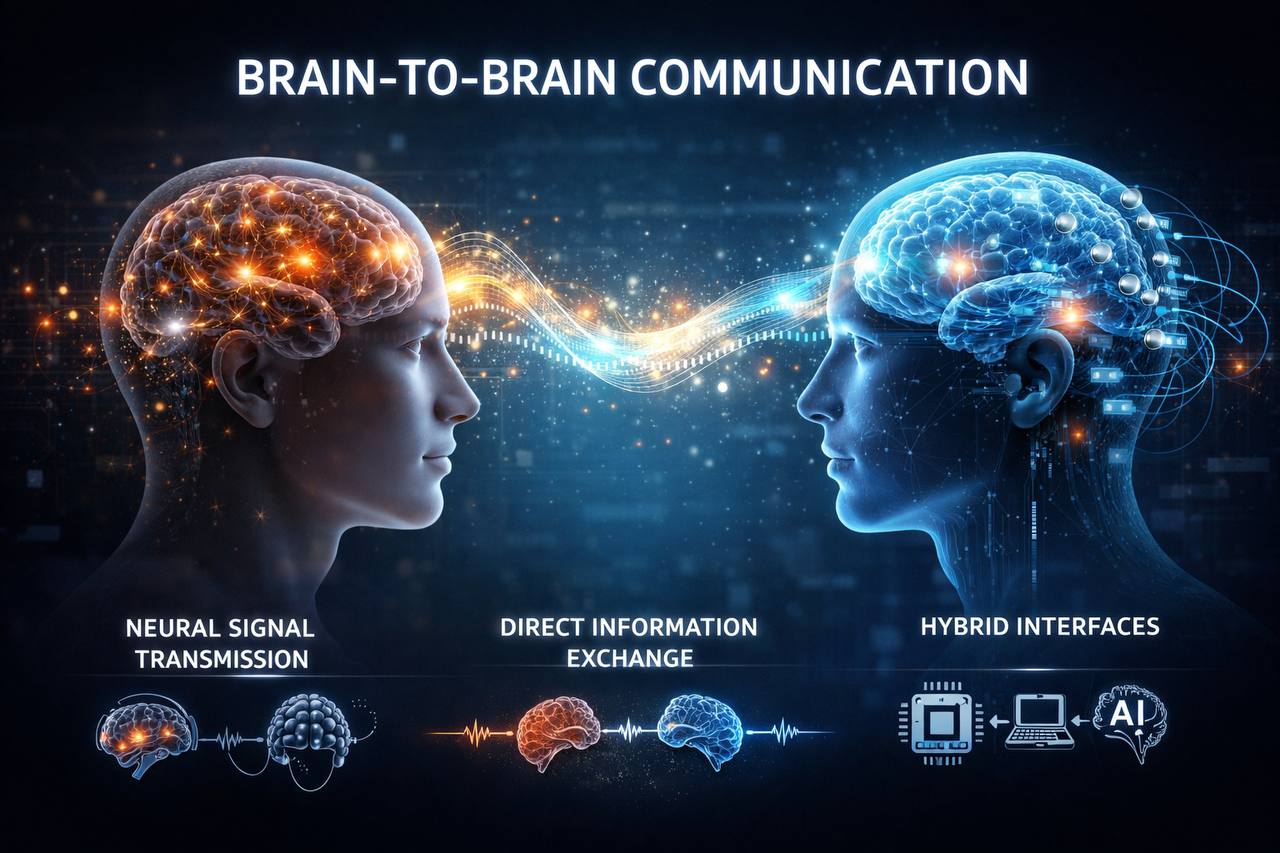
At its core, brain-to-brain communication is based on the capture, translation, and transmission of neural and bioelectrical signals. These signals, generated by brain activity, are decoded through advanced interfaces and converted into structured information that can be transmitted and interpreted by another brain or cognitive system.
Unlike traditional communication systems, this approach bypasses verbal and sensory channels, enabling non-verbal cognitive exchange. Research in this domain focuses on signal fidelity, synchronization, and bioelectronic coupling to ensure that transmitted information remains accurate, interpretable, and stable across different neural environments.
Brain-to-brain communication also intersects with brain-to-computer interfaces, forming hybrid architectures where digital systems act as mediators or amplifiers of cognitive signals. These systems enable controlled experimentation, scalability, and integration with advanced computing, artificial intelligence, and assistive technologies.
The implications extend across multiple domains, including collaborative intelligence, medical and assistive applications, secure communication, and long-term exploration of collective cognition.
Conclusion
Brain-to-brain communication represents a long-term technological and scientific horizon rather than a short-term consumer application. Its development requires rigorous research, ethical governance, and robust neurotechnological infrastructure.
As research progresses, brain-to-brain communication has the potential to redefine how humans share information, coordinate actions, and interact with both biological and artificial systems. Positioned at the intersection of neuroscience, bioelectronics, and advanced computing, this field lays the foundation for next-generation human–human and human–machine communication paradigms.